Depop or Vinted: which is better for selling clothes in the UK?
By the SaleLinx team ·
Vinted is the better choice for most everyday clothes, because the buyer pays every fee and the postage, and the audience is bigger and buys faster. Depop is the better choice for vintage, Y2K, streetwear and anything a younger buyer would describe as a look rather than a garment, because that is who browses there and they pay more for it. Plenty of sellers use both, and for a wardrobe with a mix of stock that is usually the right answer.
This guide puts the two side by side on the things that change what you earn: fees, postage, payouts, returns and buyers. Every figure comes from Depop’s or Vinted’s own help pages, checked on 30 October 2026, and each one is linked so you can check it again before you rely on it.
List high street, kidswear and anything under about £15 on Vinted. List vintage, streetwear, designer and anything that sells on styling on Depop. If you are not sure, Vinted first: it costs you nothing to find out, and you can move an item to Depop later.
Fees: what each one costs you
Neither marketplace charges a UK seller a selling fee any more. The difference is in what happens around the sale.
Vinted charges sellers nothing. Its help page on the Vinted fee says “There are no selling fees on Vinted.” The buyer pays a Vinted fee at checkout (renamed from the Buyer Protection fee in October 2026, same fee, same sums), which Vinted’s price list puts at “usually 3% to 8% + £0.3 to £0.8” of the item or bundle price. The price you set is the amount that lands in your Vinted balance.
Depop removed its 10% selling fee for UK listings in March 2024, but sellers still pay payment processing. Depop’s seller fees and charges page puts the UK rate at 2.9% plus £0.30, charged on the item price plus postage and any tax. Buyers pay a separate Marketplace fee of up to 5% of the item price plus up to £1. If you pay to boost a listing, Depop takes 12% of the sale price on top, for listings created from 23 March 2026.
On a £20 item the gap is 88p. That is small, but the buyer sees a slightly higher checkout total on Depop too, so the same item at the same price is a little harder to sell there and leaves you a little less. The gap does not decide anything on its own. The audience does.
Postage: who pays and how it works
On Vinted the buyer picks the carrier and pays for the label at checkout. Vinted’s page on shipping methods lists Evri, InPost, DPD, Royal Mail, Relay, AnyVan and DHL Express as the UK options, and says Vinted sends the seller a digital label or code once the buyer has paid. You can switch off some carriers in your settings, but some are on by default and cannot be turned off. You never set a postage price, you never pay for the label, and you cannot offer free postage.
On Depop you choose between Depop Shipping and sorting it yourself. Depop Shipping gives you an Evri label (a QR code to show at a drop-off point), the parcel is tracked, and sales up to £250 are covered by Depop Protection for sellers if the parcel is lost or damaged on the way. Use any other label and that cover does not apply. If you ship yourself, you set the postage price, choose the courier, and can offer free postage to make a listing stand out. The label prices are shown in the app when you list.
The practical difference: Vinted postage is zero admin and zero cost, but you have no say in how the buyer wants it sent. Depop takes a few more taps and the processing fee is charged on the postage too, but you control the offer.
Payouts: when you get the money
Vinted releases your money when the buyer presses “Everything is OK”, or 2 days after Vinted tells them the parcel should have arrived, whichever is first. That is from Vinted’s refund policy and its page on reporting a problem. The money sits in your Vinted balance until you withdraw it, and a withdrawal can take up to 5 business days to reach your bank.
Depop pays into your Depop balance and then transfers it to your bank automatically. Its page on getting paid in the UK says that with Depop Shipping the payment is sent 2 business days after the item shows as delivered (or 10 business days after the sale, whichever comes first), and with your own postage it is 10 business days after delivery. Funds can then take up to 5 days to appear in your bank. So a Depop sale posted with your own label is slower to pay than the same sale on Vinted.
Returns and protection
Vinted: a buyer has 2 days from the delivery notification to report an item that never arrived, arrived damaged or is significantly not as described. If they do not, the order completes and you are paid. Change of mind is different: Vinted’s page on returning an item says “it’s the seller’s choice whether to accept the return”, and the buyer pays return postage. That is one of the main reasons Vinted suits a casual seller: a buyer who simply changes their mind cannot force a return on you.
Depop: a buyer who paid through Depop Payments can claim under Depop Protection for buyers if the item does not arrive, arrives damaged or is significantly not as described, as long as they report it within 30 days of purchase. That is a longer window than Vinted’s, and Depop decides the claim. Depop does not require sellers to accept change-of-mind returns either.
Vinted Pro changes this. If you register as a business on Vinted (sole traders qualify), buyers get a legal 14-day right to return for any reason, and Vinted holds your money until that window closes. Its Pro page says Pro is free to use, and its Pro help page sets out the 14-day rule. If you buy stock to resell rather than clearing your own wardrobe, you are trading, and that applies on either marketplace. Our guide to tax on Vinted and Depop sales covers where the line is.
Who buys on each
This is where the real difference lives, and it is the one thing you cannot read off a help page.
Depop is a feed, not a catalogue. Buyers follow shops, scroll a home feed, and search in style words: Y2K, grunge, coquette, gorpcore, archive. Prices are higher because buyers are paying for the find and the styling as much as the garment. A good Depop shop has a consistent look, modelled photos, and descriptions written in the buyer’s language. Items that do well: vintage, band tees, streetwear and skate brands, designer and diffusion lines, reworked and handmade pieces, and anything with a story.
Vinted is a search engine with filters. Buyers type a brand and a size, filter by price and condition, and buy. They are shopping for the item, not the shop, and they expect it to be cheap. The audience is broad: parents buying school uniform and kidswear, people replacing a work shirt, and plenty of buyers who have never heard of Depop. Items that do well: high street brands in good condition, kidswear in bundles, outdoor and sports brands, homeware, and anything priced to go.
The same Zara dress might fetch £8 on Vinted in a week and nothing on Depop. The same 1990s band tee might sit on Vinted at £15 and sell on Depop at £45 to someone who searched for exactly that tour.
Side by side
| Depop | Vinted | |
|---|---|---|
| Seller fee | None, plus 2.9% + £0.30 payment processing on item and postage | None |
| Buyer fee | Marketplace fee, up to 5% + up to £1 | Vinted fee, usually 3% to 8% + £0.30 to £0.80 |
| Paid promotion | Boosted listings, 12% of the sale price | Bumps and Showcase, priced per item at checkout |
| Postage | You choose: Depop Shipping (Evri label) or your own. You set the price | Buyer picks the carrier and pays for the label. You print or show the code |
| Paid out | 2 business days after delivery with Depop Shipping, 10 with your own label, then up to 5 days to your bank | When the buyer confirms, or 2 days after delivery, then up to 5 business days to your bank |
| Problem window | 30 days from purchase | 2 days from delivery notification (14 for Pro sellers) |
| Change of mind returns | Your choice | Your choice (Pro sellers must accept within 14 days) |
| Buyers | Younger, style-led, follow shops, pay for the find | Broad, search-led, price-led, buy fast |
| Listing style | Modelled or styled photos, style words in the description | Clear flat or hung photos, brand, size and condition in the title |
| Best for | Vintage, streetwear, designer, reworked | High street, kidswear, sports, bundles, anything under £15 |
Which one for your wardrobe
- Clearing out everyday clothes: Vinted. The buyer pays the fee and the postage, you keep the full price, the 2-day problem window is short, and the audience is looking for exactly this. Price to sell and bundle the cheap stuff.
- Selling vintage or a curated style: Depop. Build a shop with a consistent look, model what you can, and write descriptions in the words a Depop buyer searches for. Accept that the processing fee and a slightly higher checkout total are the price of reaching those buyers.
- Kidswear: Vinted, in bundles by age and season. Depop has very little kids market.
- Designer and higher-value pieces: Depop first, for the buyer who will pay the price. Vinted’s buyers are price-led, so a £120 coat tends to attract low offers there. If it does not move on Depop in a month, list it on Vinted at a realistic price.
- Branded mid-range (Nike, Carhartt, Levi’s, The North Face): both. These have buyers on each marketplace and the right price differs, so checking sold prices on both before you list is worth the five minutes.
Timing matters a bit on either marketplace. Evenings and Sunday nights are the usual advice, and our guide to the best time to post on Vinted goes through what Vinted has actually said about it.
Selling on both
If you sell on both, the work is in not typing every listing twice and not selling the same item twice. Two rules whichever tool you use. Read Vinted’s terms first: they restrict external software tools and bulk deleting and re-listing, so keep anything you do on Vinted to the pace and volume of a person listing by hand. And delete the other copy the moment an item sells. A buyer paying for an item you have already posted to someone else is the fastest way to a bad review on both.
How SaleLinx helps
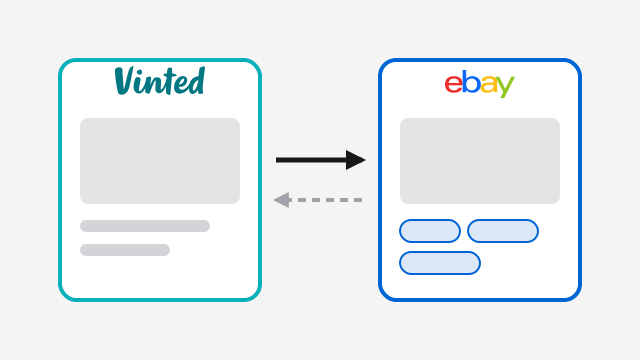
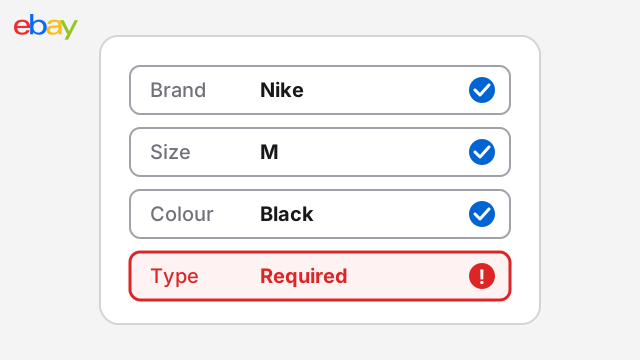
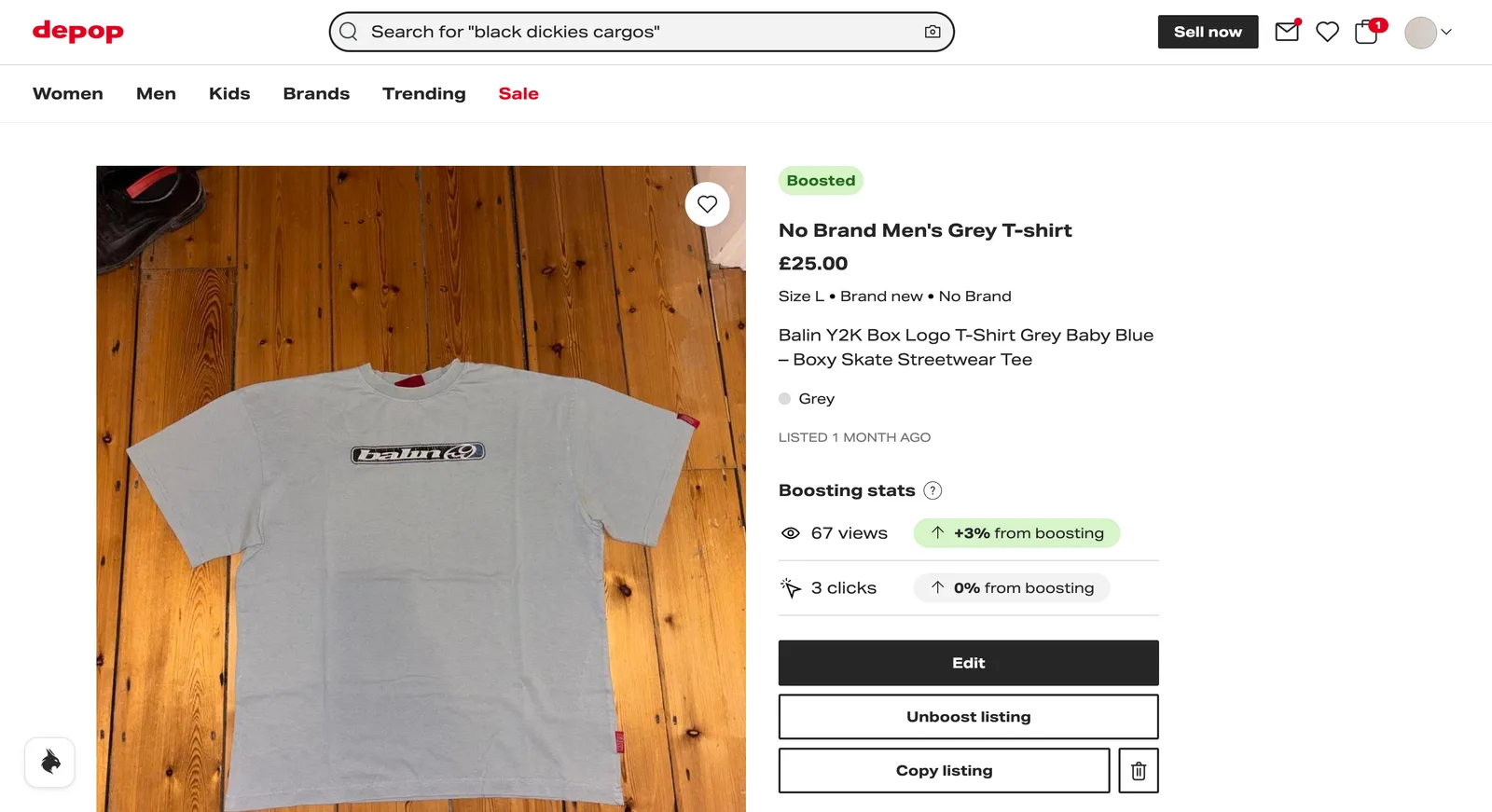
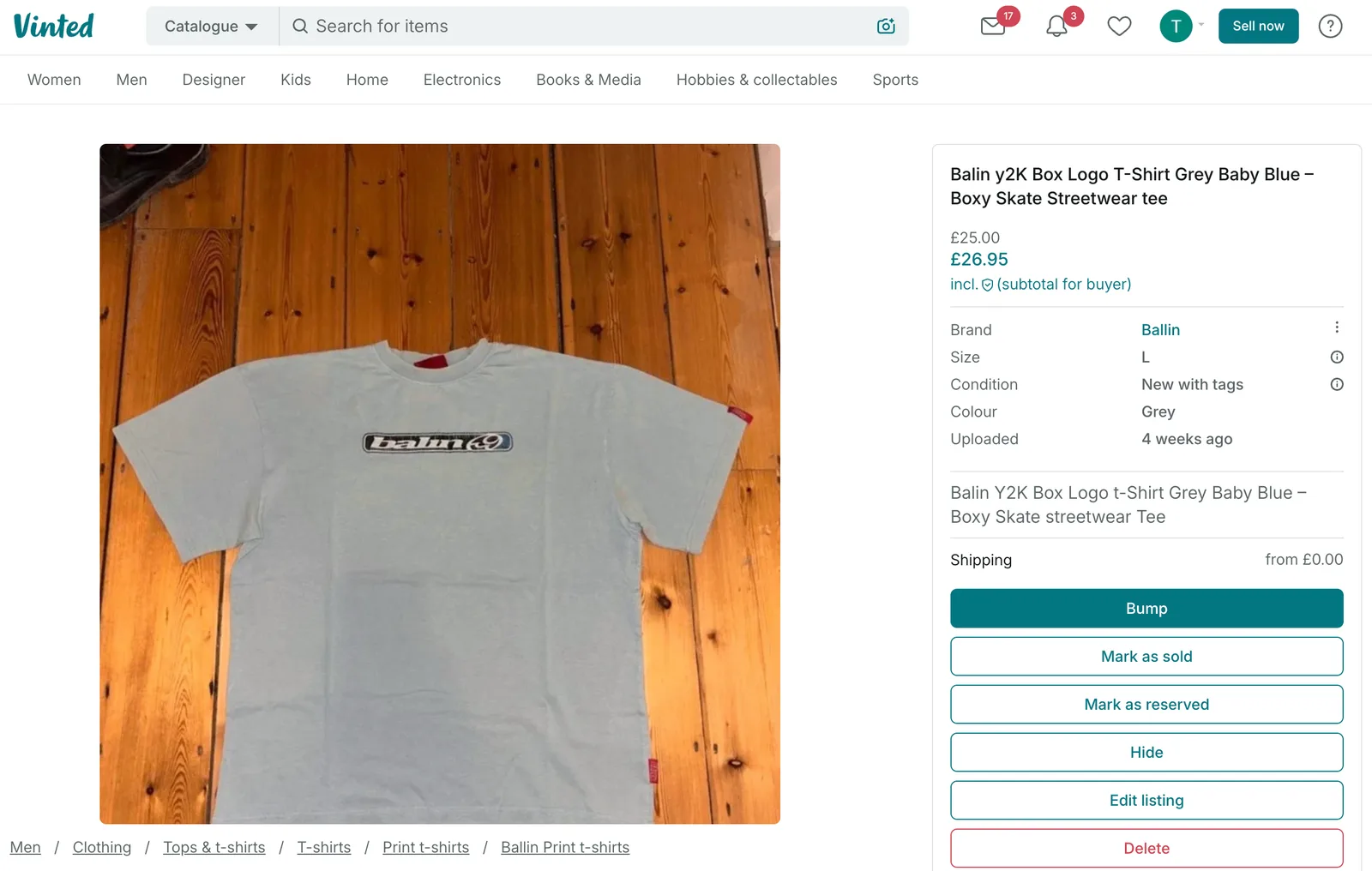
SaleLinx is a Chrome extension for Depop, Vinted and eBay sellers, made for exactly the sell-on-both case. Crosslisting copies a listing from Depop to Vinted or back, and on to eBay, and saves the Depop and Vinted copies as drafts for you to check before they go live. My Listings puts both shops in one grid, with views and likes per listing, so you can see which marketplace an item is actually working on, and the Linking tab pairs the two copies so the Restocker takes the other side down when one sells. The Labels tab merges the day’s Depop and Vinted labels into one PDF. Vinted’s terms restrict external software tools, so keep Vinted activity to what a person would do by hand. The crosslist guide walks through a first run. From £7.99 a month, with a 14-day free trial.
Questions
Is Depop or Vinted better for a beginner?
Vinted. There is nothing to set up beyond a bank account, the buyer pays every fee and the postage, you never price a label, and the problem window after delivery is 2 days. Depop rewards a shop with a look, which takes longer to build.
Which has lower fees, Depop or Vinted?
Vinted. Sellers pay nothing. Depop sellers pay 2.9% plus £0.30 in payment processing on the item and postage. Buyers pay a fee on both: up to 5% plus up to £1 on Depop, and usually 3% to 8% plus £0.30 to £0.80 on Vinted.
Can I sell the same item on Depop and Vinted at the same time?
Yes, there is no rule against it on either marketplace. The risk is selling it twice. Take the other listing down as soon as one sells, or use a crosslisting app that links the two copies and flags the sale.
Do I pay tax on Depop or Vinted sales?
Selling your own old clothes is not taxable. Buying stock to resell is trading, and HMRC’s trading allowance is £1,000 a year before you need to report it. Both marketplaces report seller data to HMRC above certain thresholds. Our guide to tax on Vinted and Depop sales has the figures and the gov.uk links.
Does Vinted have more buyers than Depop in the UK?
Vinted is the larger marketplace in the UK by most measures, and its buyers are broader: it covers kidswear, homeware and everyday high street brands that Depop barely touches. Depop’s audience is smaller and younger but spends more per item on the styles it wants. Neither publishes current UK buyer numbers, so treat any exact figure you see as an estimate.