eBay fees UK 2026: what private and business sellers pay
By Lewis Ludlam · · Facts checked
We make SaleLinx, the crosslisting extension, so read our product mentions with that in mind.

Selling on eBay UK has been free for private sellers since 2024, but buyers now pay a fee on their items, and business sellers pay a percentage of every sale.
- UK private sellers pay no selling fee on eBay (except on vehicles) and get 300 free listings a month.
- The buyer pays a Buyer Protection fee instead: 10p plus 7% of the first £20, so £1.50 on a £20 item.
- Business sellers’ buyers pay no fee. The seller pays eBay 11.9% on clothing plus 0.35%, both worked out on the total including postage, and 30p or 40p per order, all before VAT.
- If you buy things to resell, eBay says you must register as a business. It sets no minimum number of sales.
Am I a private or business seller?
eBay looks at why you sell, not how much. Its business seller policy says a seller “must register as a business if, for example, they sell items they have bought to resell, they make items in order to sell them, or if they buy items for their business”. Its upgrade page adds that selling “large volumes each month” also counts. Neither gives a number of sales below which reselling counts as private.
HMRC draws the line in the same place. Its guidance on income from online platforms says you are probably trading if you sell goods you “bought intending to sell for a profit”. Its worked example is someone buying from car boot sales and charity shops to sell online for more than they paid.
- Clearing out your own wardrobe or loft? You are a private seller.
- Buying stock to resell, from charity shops, car boots, wholesalers or other sellers? eBay expects you to use a business account.
Three things to know before you switch:
- You do not need a company. eBay says you can have a business account as someone who is self-employed (eBay).
- It is one way. “Once you’ve upgraded to a business account, it’s not possible to switch back to a private account.”
- Posing as a private seller is not allowed. UK consumer law treats “falsely representing oneself as a consumer” as unfair in all circumstances. The ban dates from 2008 and, since 6 April 2025, sits in the Digital Markets, Competition and Consumers Act 2024, Schedule 20. eBay’s policy also says business sellers “can’t represent themselves as private individuals”.
What do private sellers pay?
Nothing to sell. eBay’s fees page for private sellers says: “It’s now free for UK-based private sellers to sell on eBay (excluding motors: Cars, Motorcycles & Vehicles listings).” There is no final value fee, no regulatory operating fee and no per-order fee.
eBay made pre-owned clothing free in April 2024 (eBay) and every other category except motors on 1 October 2024 (eBay).
Listing is free up to a point. Private sellers get 300 free listings a month, then pay 35p for each one after that, and listing fees are not refunded. If you relist a few hundred one-off pieces by hand, 300 is the limit you will hit first.
The rest is optional:
- Promoted Listings. A general campaign charges the ad rate you choose, from 2% to 100% of the total sale including postage, and only if the item sells within 30 days of someone clicking the ad (eBay). A priority campaign charges per click, whether or not the item sells (eBay).
- Listing upgrades. A subtitle costs £2. Gallery Plus costs £2.50 but is free in Clothes, Shoes & Accessories. Listing in a second category costs 35p.
- A reserve price on an auction costs 4% of the reserve (the lowest reserve is £50 and the fee is capped at £150), whether or not the item sells.
- Selling abroad. When the buyer’s address is outside the UK, eBay charges a 3% international fee on the total, postage included.
These figures include VAT, except Promoted Listings, where eBay may add VAT to the ad fee.
What do buyers pay?
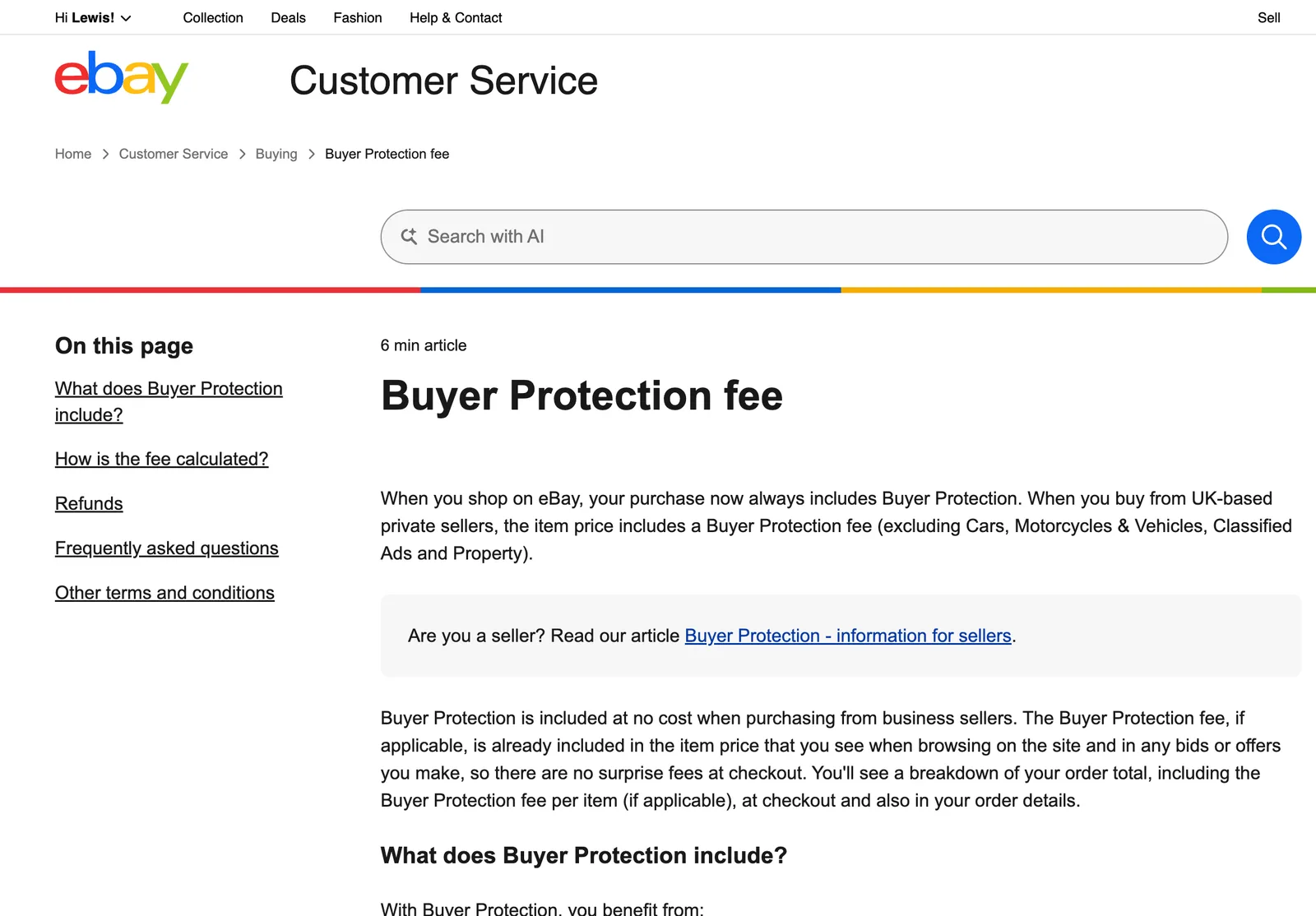
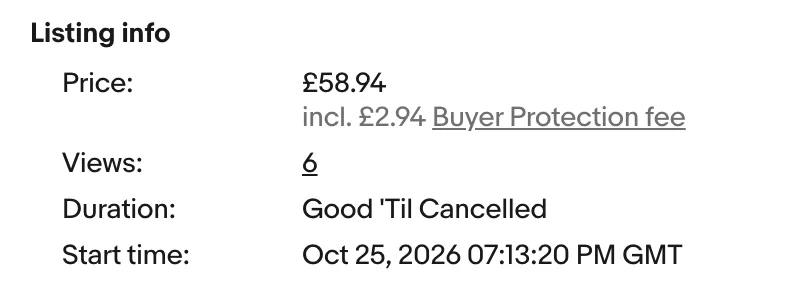
The cost of free selling moved to the buyer. Anyone buying from a UK private seller pays eBay a Buyer Protection fee:
- A flat 10p per item
- 7% of the item price up to £20
- 4% of any part of the price from £20 to £300
- 2% of any part of the price from £300 to £4,000
Nothing is added above £4,000, so the fee tops out at £86.70. It includes VAT and is worked out on the item price (eBay’s own examples add postage on top).
- It is already in the price buyers see when browsing, and checkout shows it as a separate line.
- A buyer who gets a full refund gets the fee back too.
- Buyers do not pay it on items from business sellers, or on cars, motorcycles and vehicles.
- Buyer Protection fee
- £0.45
- Buyer pays, before postage
- £5.45
- Buyer Protection fee
- £0.80
- Buyer pays, before postage
- £10.80
- Buyer Protection fee
- £1.50
- Buyer pays, before postage
- £21.50
- Buyer Protection fee
- £2.70
- Buyer pays, before postage
- £52.70
- Buyer Protection fee
- £4.70
- Buyer pays, before postage
- £104.70
| Your price | Buyer Protection fee | Buyer pays, before postage |
|---|---|---|
| £5 | £0.45 | £5.45 |
| £10 | £0.80 | £10.80 |
| £20 | £1.50 | £21.50 |
| £50 | £2.70 | £52.70 |
| £100 | £4.70 | £104.70 |
If you see the fee quoted elsewhere with a 75p flat part, that is the version eBay launched in February 2025 (eBay). eBay cut the flat part to 10p on 17 July 2025 (eBay Community).
Offers include the fee
On a private seller’s listing, a buyer’s bid or offer includes the Buyer Protection fee (eBay). eBay’s example is a £250 offer, which contains a £10.29 fee and leaves the seller £239.71. eBay shows you the offer without the fee, so the number in front of you is what you keep.
The buyer’s number and yours differ: a buyer who offers £20 is offering you £18.60. When you weigh an eBay offer against one on Depop or Vinted, compare what you would keep.
What do business sellers pay?
Business sellers’ buyers pay no Buyer Protection fee. The seller pays eBay instead. eBay’s fees page for business sellers sets out three charges on every sale, all quoted before VAT:
- Final value fee: a percentage, set by category, of the total sale, “which includes the item price, postage, and any applicable taxes”.
- Per-order fee: 30p on orders of £10 or less and 40p on orders over £10. The 40p rate started on 12 February 2026 (eBay).
- Regulatory operating fee: 0.35% of the total.
One more charge only matters if you list on another country’s eBay site in a different currency: the seller currency conversion charge. For UK-registered sellers it is 2.5% now and rises to 2.75% from 1 December 2026 (eBay).
- Final value fee, before VAT
- 11.9%
- Final value fee, before VAT
- 11.9%, or 7% when the item price is £100 or more
- Final value fee, before VAT
- 12.9% up to £800, then 7% on the part above
- Final value fee, before VAT
- 14.9% up to £1,000, then 4% on the part above
- Final value fee, before VAT
- 12.9% up to £750, then 3% on the part above
- Final value fee, before VAT
- 10.9%
- Final value fee, before VAT
- 9.9%
- Final value fee, before VAT
- 12.9%
| Category | Final value fee, before VAT |
|---|---|
| Clothes, Shoes & Accessories | 11.9% |
| Trainers | 11.9%, or 7% when the item price is £100 or more |
| Women's Bags & Handbags | 12.9% up to £800, then 7% on the part above |
| Jewellery & Watches, except watches | 14.9% up to £1,000, then 4% on the part above |
| Watches, Parts & Accessories | 12.9% up to £750, then 3% on the part above |
| Collectables | 10.9% |
| Books, Comics & Magazines | 9.9% |
| Everything Else | 12.9% |
Worked example
A £20 jacket with £3.50 postage, where the buyer pays £23.50:
- Final value fee, 11.9% of £23.50: £2.80
- Regulatory operating fee, 0.35% of £23.50: £0.08
- Per-order fee, as the order is over £10: £0.40
That is £3.28 before VAT, about 14% of what the buyer paid. eBay adds UK VAT at 20% to business sellers’ fees, which makes it £3.93 (eBay Community). If you are registered for VAT you can usually reclaim it. If you are not, or you use the flat rate scheme, it is a real cost.
What else changes the bill
- eBay Shops cost £27 (Basic), £77 (Featured) or £437 (Anchor) a month before VAT (eBay). They give you more free listings and cheaper extra ones, not a lower final value fee, and you do not need one to sell as a business.
- Below Standard sellers pay an extra 6 percentage points of final value fee, or 7 after four months in a row. A clothing sale then costs 17.9% before the other two fees.
- Top Rated sellers get 10% off the percentage part of the final value fee on Premium Service listings.
The gap is smaller than it looks
A private seller’s £20 item shows buyers £21.50, because the Buyer Protection fee is already in the price. A business seller can list the same item at £21.50, which looks the same to a buyer and costs them the same at checkout, and keep £18.47 before VAT on fees.
At the same price to the buyer, selling as a business costs you about £1.50 on a £20 item, not £2.85.
eBay, Depop and Vinted compared
- eBay, private
- Nothing
- eBay, business
- 11.9% + 0.35% + 40p (clothing, before VAT)
- Depop
- 2.9% + 30p payment processing
- Vinted
- Nothing
- eBay, private
- 10p + 7% up to £20, then less
- eBay, business
- Nothing
- Depop
- Up to 5% + up to £1
- Vinted
- Usually 3% to 8% + 30p to 80p
- eBay, private
- £20.00
- eBay, business
- £17.15
- Depop
- £19.12
- Vinted
- £20.00
- eBay, private
- £21.50
- eBay, business
- £20.00
- Depop
- Up to £22.00
- Vinted
- £20.90 to £22.40
| eBay, private | eBay, business | Depop | Vinted | |
|---|---|---|---|---|
| Seller pays | Nothing | 11.9% + 0.35% + 40p (clothing, before VAT) | 2.9% + 30p payment processing | Nothing |
| Buyer pays on top | 10p + 7% up to £20, then less | Nothing | Up to 5% + up to £1 | Usually 3% to 8% + 30p to 80p |
| Seller keeps on £20 | £20.00 | £17.15 | £19.12 | £20.00 |
| Buyer pays for £20 | £21.50 | £20.00 | Up to £22.00 | £20.90 to £22.40 |
On fees alone, a private eBay account and Vinted both leave you the full price. Depop’s payment processing fee takes 88p of a £20 sale, and a business eBay account costs the most. Buyers pay a similar extra everywhere, roughly £1 to £2.50 on a £20 item, but only eBay publishes an exact formula. To keep the same amount on Depop, price it about 3% plus 30p higher.
How fast is the money?
- eBay, private: money for tracked items becomes available 2 days after delivery. Since 6 August 2025, private sellers with at least 10 completed sales worth £150 or more in the last five years, and no more than 2 cases or defects in the last 12 months, get it within 24 hours of the buyer paying (eBay). Private sellers withdraw whenever they like.
- eBay, business: money is usually available about a day after the buyer pays, without waiting for delivery, and is paid out on a schedule, daily by default.
- Depop: with Depop Shipping, 2 business days after the item shows as delivered, or 10 business days after the sale if that comes first, then up to 5 days to reach your bank (Depop).
- Vinted: the order completes when the buyer confirms everything is fine, or 2 days after delivery, and the money reaches your Vinted balance within 2 days of that (Vinted). A withdrawal then takes up to 5 business days (Vinted).
eBay completed its purchase of Depop on 30 July 2026, but Depop runs as its own platform with its own fees (Depop).
How does postage work? Simple Delivery
For private sellers, Simple Delivery “is the only delivery method available for private sellers who list eligible items on eBay.co.uk”. That covers most items up to £750, apart from smartphones over £300 and some restricted items.
- You choose whether the buyer or you pays for postage.
- When the item sells, you get a prepaid label or QR code for Evri, Royal Mail, InPost or DHL, valid for 7 days.
- eBay charges nothing extra for Simple Delivery and adds no fee on top of the label price.
- eBay deals with delivery problems with the buyer.
If the parcel is bigger or heavier than the size you chose, you pay the difference plus a £1 admin fee, so weigh and measure before you list. Business sellers keep their own delivery options (eBay).
Can I sell on Depop or Vinted too?
Yes, but end the eBay listing as soon as the item sells elsewhere. eBay’s selling practices policy says you must not list an item “that you’re simultaneously selling outside of eBay without ensuring beforehand that you have enough product available”. With one-off second-hand pieces, that means ending the listing the moment it sells somewhere else.
If an eBay buyer buys before you end the listing and you cancel, it counts against you. eBay’s seller standards treat cancelling an order “because they sold it to someone else” as a transaction defect.
- You can have defects on up to 2% of your transactions.
- You are rated Below Standard once your defects involve more than 4 different buyers.
- Below Standard can push your listings down in search, lower your selling limits and hold your funds. For business sellers it brings the 6-point fee surcharge above.
Returns and the Money Back Guarantee
Almost every sale paid through eBay’s checkout, private or business, is covered by the eBay Money Back Guarantee. Vehicles and a few other categories are not.
- A buyer can report an item that never arrived up to 30 days after the estimated delivery date, or return one that is not as described within 30 days of delivery.
- Saying “no returns” does not stop a not-as-described claim. The buyer can return the item “even if the seller doesn’t offer returns”, and you pay the return postage.
- You have 3 business days to respond before the buyer can ask eBay to step in.
Business sellers also owe buyers their legal rights:
- Under the Consumer Contracts Regulations, a buyer can cancel for any reason within 14 days of receiving the item. If you do not tell them about that right, the window is extended by up to 12 months.
- eBay’s business seller policy also asks you to accept faulty items back within 30 days for a full refund, and to show your business contact details.
For private sellers, the main legal duty is that the item matches its description (Sale of Goods Act 1979, section 13). A clear description, with photos of any flaws, is your best defence against a not-as-described claim.
Does eBay report to HMRC?
Yes, once you make 30 sales or receive €2,000 (about £1,700) in a calendar year, like Depop and Vinted (GOV.UK). For 2026, eBay puts the money limit at £1,707, after its fees. Its sales reporting page asks for your National Insurance number once you reach either limit, and eBay can hold your payouts or block selling until you provide it.
Being reported does not mean you owe tax. Each platform counts separately, so staying under 30 sales on each one does not change what you owe: what matters is your total trading income across all of them.
Our guide to tax on Depop and Vinted sales covers the £1,000 trading allowance and the Self Assessment dates, and the same rules apply to eBay.
 How SaleLinx helps
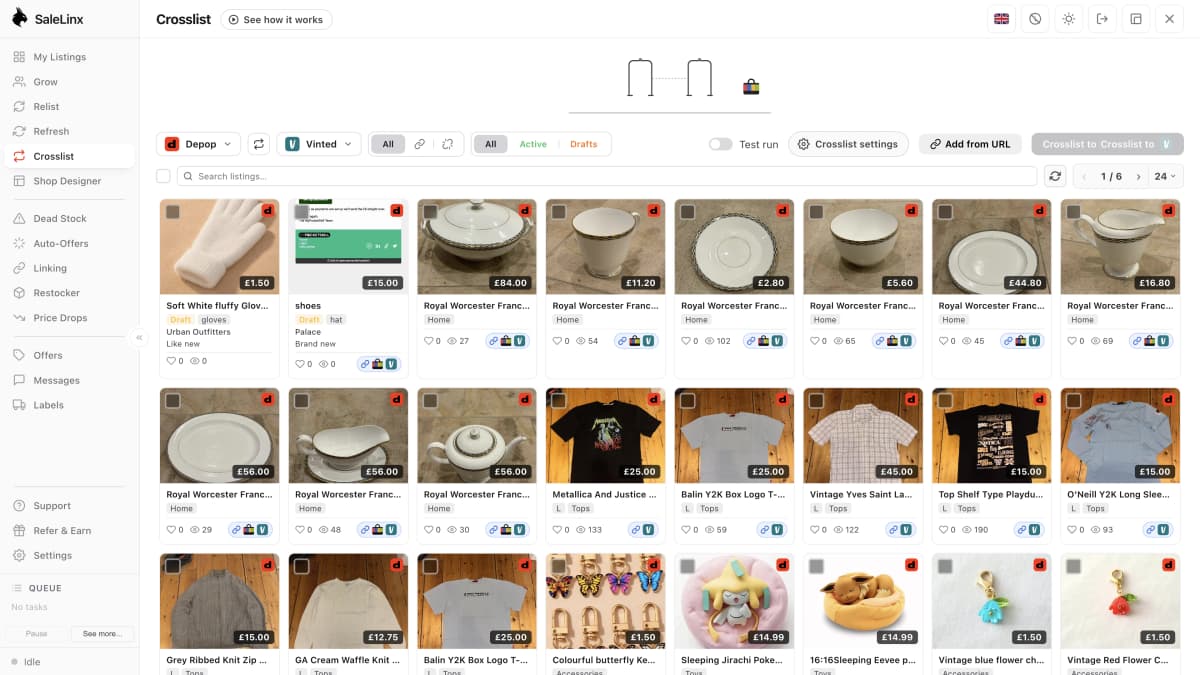
SaleLinx is a Chrome extension for Depop, Vinted and eBay sellers. The fee question comes up most when you copy a listing across.
- The Vinted to eBay crosslister shows eBay’s fee for each item, and anything eBay would refuse, before the copy is posted.
- The eBay bulk editor changes the price, title, description or quantity across the eBay listings you select.
- My Listings puts your Depop, Vinted and eBay listings in one grid.
- On Pro and Business plans, linked copies are ended for you when the item sells elsewhere, within about 15 minutes for eBay. That cuts the window for a second buyer and a cancellation defect.
Vinted’s terms restrict external software tools, so keep what you do there to what a person would do by hand. From £7.99 a month, with a 14-day free trial.
Try it free for 14 daysQuestions
Is it free to sell on eBay UK?
For private sellers based in the UK, yes, except for vehicles. You get 300 free listings a month and pay no fee when an item sells. The buyer pays a Buyer Protection fee instead. Business sellers pay a final value fee, a per-order fee and a regulatory operating fee on every sale.
Do I need a business account to resell clothes on eBay?
eBay’s policy says you must register as a business if you sell items you bought to resell. It sets no minimum number of sales. You can do that as a sole trader, and you do not need a company. Once you upgrade, you cannot switch back.
Does eBay charge fees on postage?
For business sellers, yes: the final value fee and the regulatory operating fee are both worked out on the total, postage included. Private sellers pay no selling fee, and the buyer’s Buyer Protection fee is worked out on the item price.
Who pays the eBay Buyer Protection fee?
The buyer, and only on items from UK private sellers. It is already included in the price buyers see, and checkout shows it as a separate line. On offers and auctions the buyer’s bid or offer includes the fee, but eBay shows you the amount without it, so the figure you see is what you get.