Side hustle tax: the £3,000 trading allowance explained
By Matt Valetsky · · Facts checked
We make SaleLinx, the crosslisting extension, so read our product mentions with that in mind.

At Budget 2026 on 28 October, the government said it will treble the trading allowance, the tax-free amount for small side incomes, from £1,000 to £3,000 from 6 April 2027. It is not law yet: it needs the Finance Bill 2026-27 to pass.
- From 6 April 2027, trading income of £3,000 or less in the tax year is tax-free, and you do not need to tell HMRC.
- The £3,000 counts what buyers paid you, before your costs.
- Until then the limit is still £1,000, including the tax year running now (6 April 2026 to 5 April 2027).
- If you only sell your own unwanted things, none of this applies to you.
Written by the SaleLinx team. We are not accountants and an accountant has not reviewed this. It is general information, last checked against GOV.UK on 6 November 2026, and the change still has to pass into law. Check your own situation with HMRC or an accountant, or use HMRC’s online checker.
What was announced
For resellers on Depop, Vinted and eBay it is the biggest change to the “side hustle tax” rules since platforms started reporting sellers to HMRC in 2024.
HMRC’s policy paper, published on Budget day, says the measure “increases the amount of the trading allowance from £1,000 to £3,000”, with effect “from 6 April 2027, for the tax year 2027 to 2028 onwards”. The Self Assessment reporting threshold for trading income rises to £3,000 at the same time (Budget 2026 overview, paragraph 1.5).
HMRC estimates that:
- up to 1.4 million people could benefit;
- about 400,000 will pay less tax, by £380 a year on average;
- about 100,000 will no longer need to report their trading income at all.
How is this different from the 2025 plan?
In March 2025 the government said it would raise only the reporting threshold to £3,000, “within this parliament”. The tax-free allowance would have stayed at £1,000, so income between £1,000 and £3,000 would still have been taxed, just reported through a simpler online service.
The Budget raises the allowance itself, so that £1,000 to £3,000 band is tax-free as well as easier to report.
When does it start?
The allowance works by tax year, from 6 April to 5 April. The new figure only applies from the 2027 to 2028 tax year.
- Trading allowance
- £1,000
- Register for Self Assessment by
- 5 October 2026
- File and pay by
- 31 January 2027
- Trading allowance
- £1,000
- Register for Self Assessment by
- 5 October 2027
- File and pay by
- 31 January 2028
- Trading allowance
- £3,000
- Register for Self Assessment by
- 5 October 2028
- File and pay by
- 31 January 2029
| Tax year | Trading allowance | Register for Self Assessment by | File and pay by |
|---|---|---|---|
| 6 April 2025 to 5 April 2026 | £1,000 | 5 October 2026 | 31 January 2027 |
| 6 April 2026 to 5 April 2027 | £1,000 | 5 October 2027 | 31 January 2028 |
| 6 April 2027 to 5 April 2028 | £3,000 | 5 October 2028 | 31 January 2029 |
The middle row is the one to watch. If your trading income since 6 April 2026 is already over £1,000, the new allowance does not cover it. You still need to register by 5 October 2027 and file a return for that year.
Does it count sales or profit?
Sales, not profit. The allowance is measured against your gross trading income: everything buyers paid you, before you take off what you spent on stock, postage or packaging (GOV.UK). The Budget overview says the same: you no longer declare or pay tax on the income “where the allowances cover all their relevant income before expenses”.
If you go over, you choose one of two deductions on your return: take off the allowance, or take off your actual costs. Not both. A bigger allowance makes the first option worth a lot more. Here are two resellers under each system:
- Tax year to 5 April 2027 (£1,000)
- Over the limit. Register, and claim costs: £1,600 is taxable
- From 6 April 2027 (£3,000)
- Under the limit. Tax-free, nothing to tell HMRC
- Tax year to 5 April 2027 (£1,000)
- Over the limit. Register, and claim costs: £1,600 is taxable
- From 6 April 2027 (£3,000)
- Over the limit. Register, and claim the allowance: £400 is taxable
| Tax year to 5 April 2027 (£1,000) | From 6 April 2027 (£3,000) | |
|---|---|---|
| Seller A: £2,800 of sales, £1,200 of costs | Over the limit. Register, and claim costs: £1,600 is taxable | Under the limit. Tax-free, nothing to tell HMRC |
| Seller B: £3,400 of sales, £1,800 of costs | Over the limit. Register, and claim costs: £1,600 is taxable | Over the limit. Register, and claim the allowance: £400 is taxable |
Seller B shows the catch. At £3,400 of sales they are over £3,000 and still file a return, even though their profit is only £1,600. Claiming the £3,000 allowance instead of their £1,800 of costs leaves just £400 to be taxed.
What stays the same?
- Selling your own things is not trading. GOV.UK says you are “unlikely to pay tax if you sell personal items from your home” (GOV.UK). The allowance only matters if you buy or make things to sell at a profit. Our guide to tax on Depop and Vinted sales explains where that line sits.
- Platforms still report you. Depop, Vinted and eBay send HMRC your details once you make 30 sales or receive €2,000 (about £1,700) in a calendar year. The Budget did not change that, and being reported does not mean you owe tax.
- It is one allowance for all of it. HMRC’s side hustle guide says “you have a single £1,000 tax-free allowance for each tax year”, and income from different side hustles counts towards it. From April 2027, Depop, Vinted, eBay and a bit of freelance work all share the one £3,000.
- Some people register anyway. For example, to claim a loss, to pay voluntary Class 2 National Insurance, or to claim Tax-Free Childcare or Maternity Allowance based on self-employment (GOV.UK).
- The property allowance is separate. It covers income from renting out property, stays at £1,000, and was not part of this change.
- Bigger thresholds do not move. Making Tax Digital and VAT registration depend on much larger figures, covered in our main tax guide.
What is the VAT change for marketplaces?
The Budget also plans to extend the rules that make online marketplaces collect VAT to sales by UK businesses that are VAT registered or sell over £90,000 a year on one platform, from October 2027. It “will not apply to non-business (i.e. personal) sales, second-hand goods, or business-to-business transactions” (Budget 2026 overview, paragraph 1.55).
For a seller of second-hand clothes it is unlikely to change anything. The threshold and start date are still to be confirmed in 2027.
What to do now
- Add up this tax year so far. Count what buyers have paid you since 6 April 2026 across every platform. Over £1,000 and trading means registering by 5 October 2027.
- Keep records as if you will file. Sales, stock receipts, postage and packaging. Near the £3,000 line, the receipts decide whether claiming costs or the allowance is better.
- Check again before April 2027. These figures are what the government has announced. If the Finance Bill changes them, we will update this guide.
 How SaleLinx helps
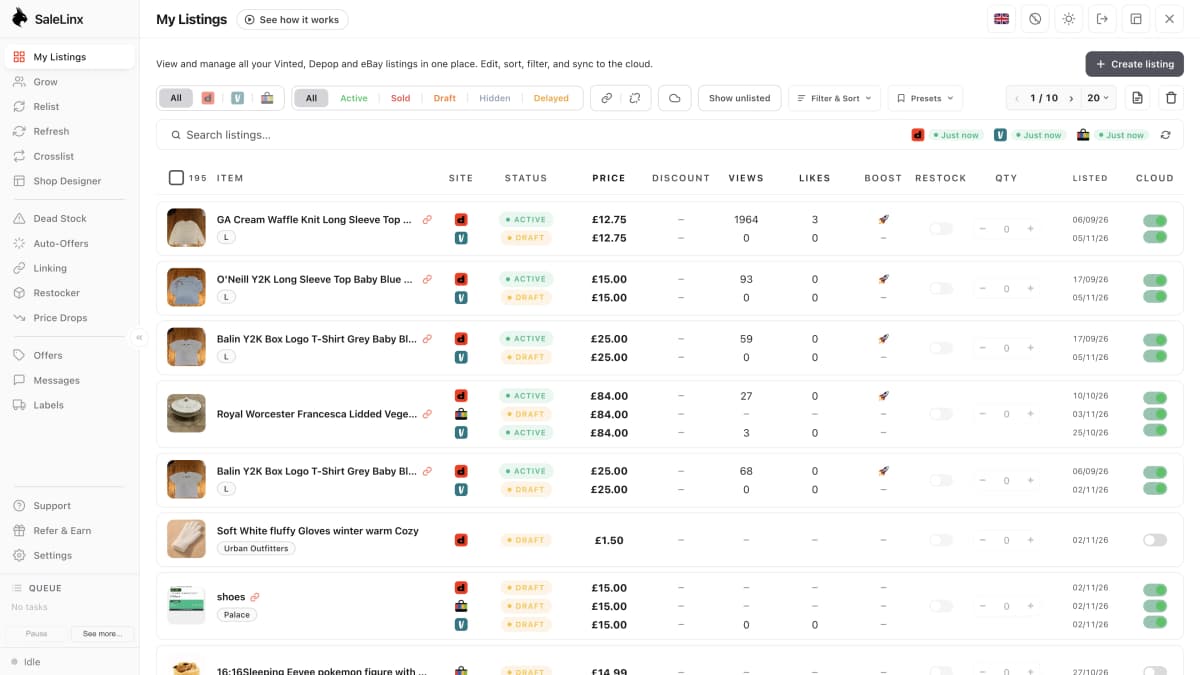
SaleLinx is a Chrome extension for Depop, Vinted and eBay sellers. It is not an accounting tool and it will not file anything for you. Where it helps is the adding up.
- My Listings puts your listings from all three marketplaces in one grid, sold items included, with prices and dates, so checking your total against £1,000 now and £3,000 from April 2027 does not mean three separate sales histories.
- Cloud sync keeps a copy of a listing’s details and photos in your account after the marketplace stops showing it.
Receipts for stock and postage are still yours to keep. Vinted’s terms restrict external software tools, so keep what you do on Vinted to what a person would do by hand. From £7.99 a month, with a 14-day free trial.
Try it free for 14 daysQuestions
Is the £3,000 trading allowance in force now?
No. It starts on 6 April 2027, for the 2027 to 2028 tax year, and the Finance Bill still has to pass. Until then the allowance is £1,000.
Is the £3,000 before or after costs?
Before. It is measured against what buyers paid you. If your sales are over £3,000, you register even if your profit is lower, then choose between deducting £3,000 or your actual costs.
Do I need to tell HMRC about what I sell before April 2027?
Possibly. If you are trading and your income between 6 April 2026 and 5 April 2027 is over £1,000, you need to register by 5 October 2027. The new allowance does not reach back to that year.
Is it £3,000 for each platform?
No. It is one allowance for all your trading income in the tax year, however many platforms or side hustles it comes from.
Will Vinted, Depop or eBay still report me to HMRC?
Yes, if you make 30 sales or receive €2,000 (about £1,700) in a calendar year. That rule did not change. A report is information for HMRC, not a tax bill.